The books that travelled alongside the Bible for thousands of years — the stories of Adam and Eve after Eden, the Apocrypha, Enoch, Jasher, Jubilees, and more — in public-domain translations you can read and hear read aloud, free.
Please read this first
These ancient books are not the Bible itself — they are writings from the world around it. The Apocrypha below is part of the Old Testament in Catholic and Orthodox Bibles, though not in the Protestant canon. The other books — the writings of Adam and Eve, Enoch, Jasher, Jubilees, the Testaments, the Psalms of Solomon — were never received as Scripture by most historic churches; they are ancient religious writings that were read, copied, argued over, and in some lands treasured for centuries.
We present them as they are, in older public-domain translations, with the translator and source named on every book, so you can read the wider ancient world of the Bible for yourself and weigh it honestly. Where a book survives only in pieces, the page says so plainly.
The Adam and Eve Books
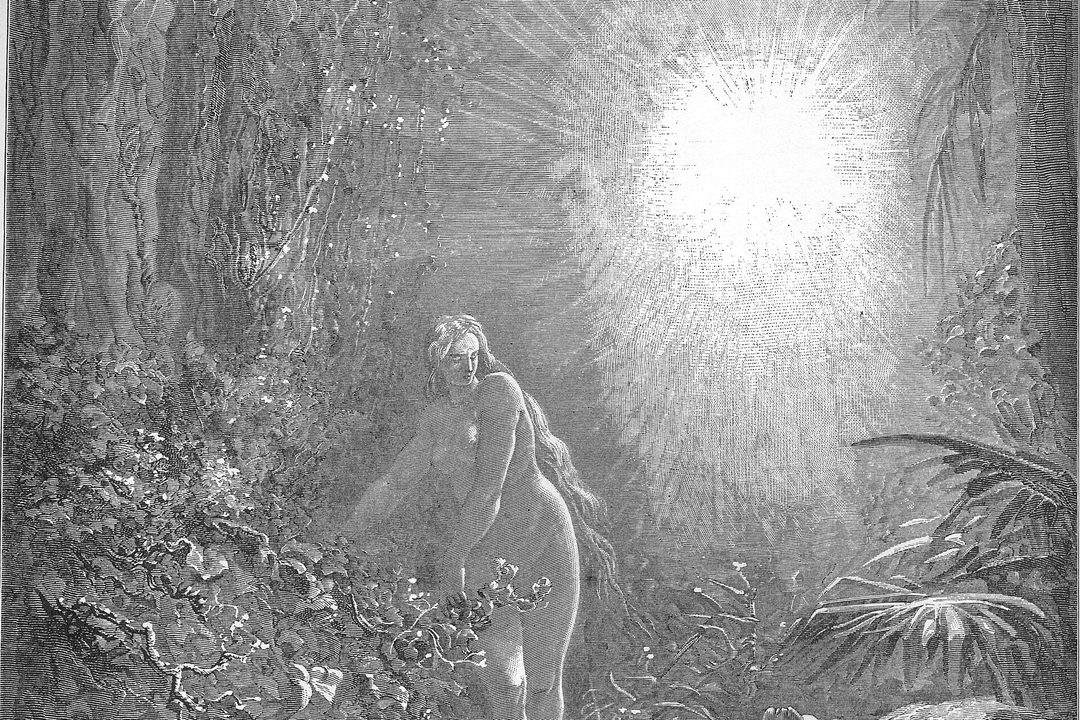
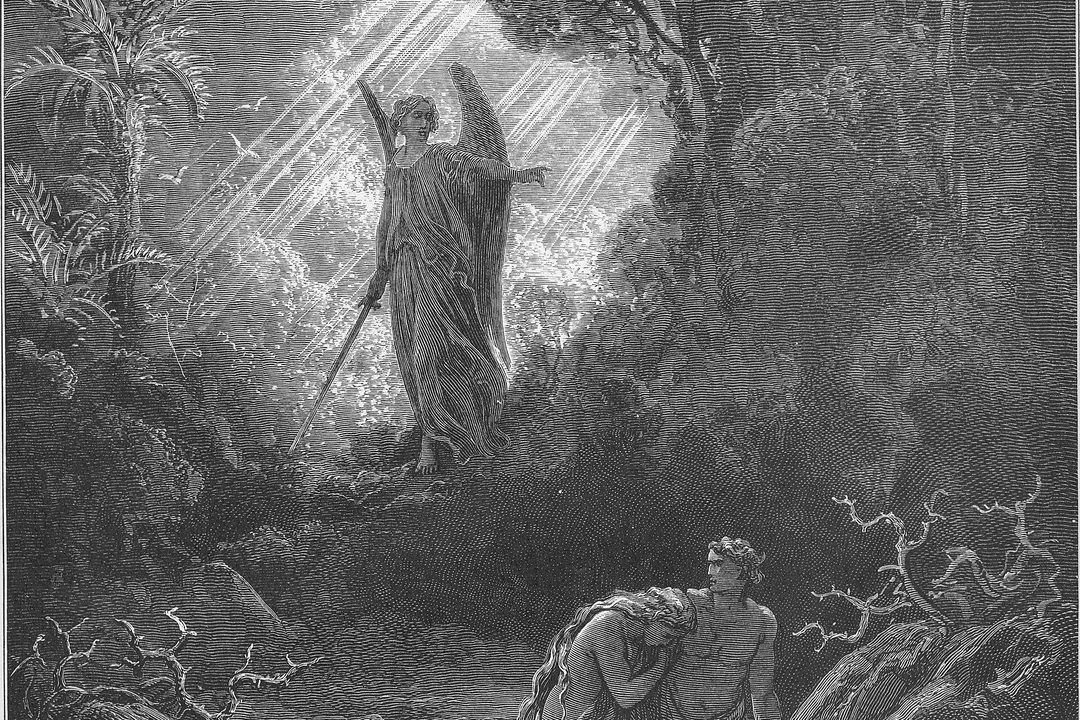
Three accounts of the first parents after the expulsion from Eden.
The First Book of Adam and Eve
77 chapters
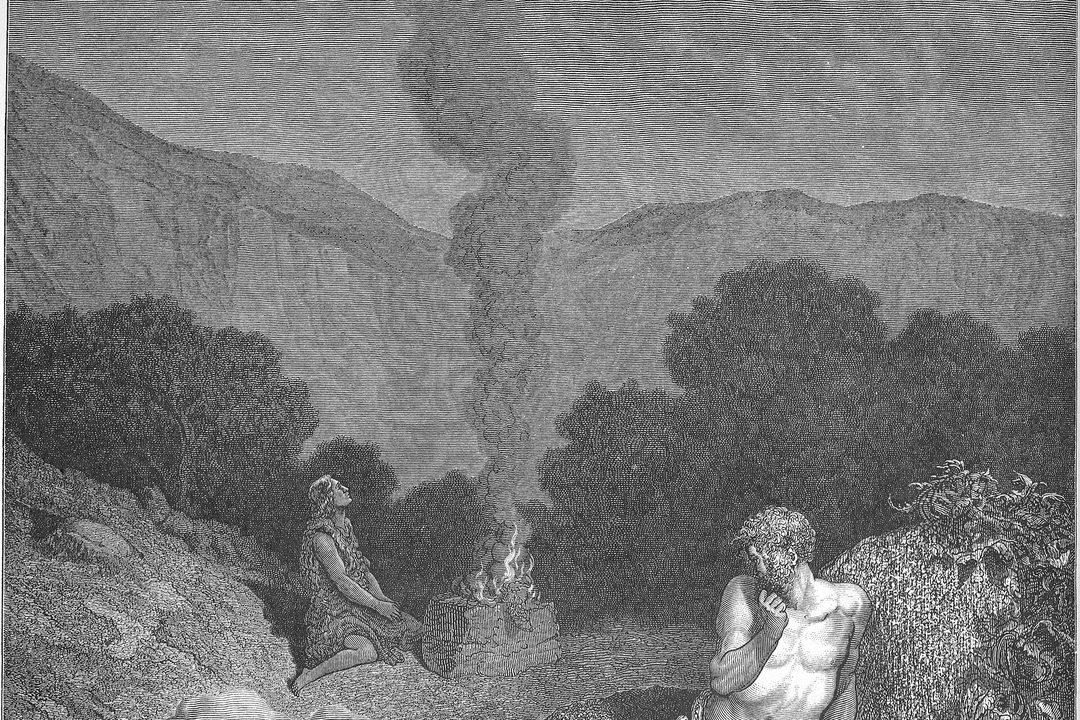
Adam and Eve in the Cave of Treasures: their grief, hunger and prayers, Satan's repeated attempts to deceive them, the births of Cain, Abel and their twin sisters, Cain's murder of Abel, and the death of Adam. The printed edition skips chapters VII and XLVIII in its numbering, which is kept here.
Translated from the Ethiopic by S. C. Malan (1882)
The Second Book of Adam and Eve
22 chapters
The history of the families before the Flood: Cain's line multiplying below the mountain, the children of Seth dwelling on the holy mountain and how they were lured down, the death of Cain, and the patriarchs down to the birth of Noah.
Translated from the Ethiopic by S. C. Malan (1882)
The Life of Adam and Eve
49 chapters as printed
Adam and Eve outside paradise: their search for food, Eve's second deception by the devil at the river Tigris, Seth's journey back toward paradise, Adam's sickness and death, and his burial. This is the Latin version, the Vita Adae et Evae; the 1913 edition has no chapters XXXII or XXXVII.
Translated by L. S. A. Wells, in Charles, Apocrypha and Pseudepigrapha (1913)
The Apocrypha
These thirteen books are Scripture in the Catholic and Orthodox churches; Protestant Bibles print them, if at all, as an appendix. They are given here in the King James Version of 1611, the same translation as the Bible on this site.
Tobit
14 chapters
Tobit, a righteous Israelite in exile at Nineveh, is blinded; his son Tobias journeys with the angel Raphael, defeats the demon Asmodeus, and heals his father's eyes.
King James Version (1611)
Judith
16 chapters
The widow Judith saves her besieged city of Bethulia by entering the camp of the Assyrian general Holofernes — and taking his head.
King James Version (1611)
The Wisdom of Solomon
19 chapters
A king's meditation on wisdom: her praise, the fate of the righteous and the wicked, and a retelling of the Exodus as the work of Wisdom herself.
King James Version (1611)
Sirach (Ecclesiasticus)
51 chapters
The wisdom of Jesus the son of Sirach: practical teaching on speech, money, family and friendship, ending with the praise of the famous men of Israel.
King James Version (1611)
Baruch
6 chapters
The words of Baruch, Jeremiah's scribe, to the exiles in Babylon: confession of sin, the praise of Wisdom, comfort for Jerusalem — and, as chapter 6, Jeremiah's letter against idols.
King James Version (1611)
1 Maccabees
16 chapters
History of the Jewish revolt against Antiochus Epiphanes: Mattathias and his sons, Judas Maccabaeus, the rededication of the Temple, and the road to independence.
King James Version (1611)
2 Maccabees
15 chapters
The same era told with wonders: the martyrdoms under Antiochus, Judas's campaigns, and prayers for the dead — a book treasured especially in Orthodox and Catholic tradition.
King James Version (1611)
1 Esdras
9 chapters
Israel's story retold, from Josiah's Passover to Ezra reading the Law in Jerusalem — with the famous contest of Darius's three bodyguards on what is strongest: wine, the king, women's beauty, or truth. "Great is truth, and mighty above all things."
King James Version (1611)
2 Esdras
16 chapters
The prophet Ezra's apocalypse: seven visions and long dialogues with the angel Uriel on why Israel suffers, the coming judgment, the mourning woman who becomes Zion, and the Messiah who dies and rises. Chapters 1–2 and 15–16 are later Latin additions.
King James Version (1611)
Susanna
1 chapter
Susanna, a righteous wife in Babylon, refuses two corrupt elders and is falsely accused by them; the young Daniel cross-examines the elders apart, catches their story apart, and saves her. A Daniel addition, set apart because it is not in the Hebrew.
King James Version (1611)
Bel and the Dragon
1 chapter
Daniel proves the idol Bel eats nothing — its priests creep in by night and eat the offerings themselves — then bursts the great dragon with a cake of pitch, fat and hair, and is thrown into the lions' den a second time. A Daniel addition, not in the Hebrew.
King James Version (1611)
The Song of the Three Holy Children
1 chapter
The prayer of Azarias and the great hymn of the three young men inside Nebuchadnezzar's fiery furnace — "O all ye works of the Lord, bless ye the Lord." In the Greek Bible it stands in Daniel 3, between verses 23 and 24; it is not in the Hebrew.
King James Version (1611)
The Prayer of Manasseh
1 chapter
The repentance of Manasseh, Judah's most wicked king, prayed from his captivity in Babylon: "I have sinned above the number of the sands of the sea." One short prayer, treasured by the Church as the model of a sinner's return.
King James Version (1611)
More Ancient Writings
Books preserved by ancient communities — in Ethiopia, in caves at Qumran, and in single manuscripts — read here in the classic English translations.
The Book of Enoch (1 Enoch)
108 chapters
Visions in the name of Enoch, Noah's great-grandfather: the descent of the Watchers, the judgment of the angels and of kings, Enoch's journeys through heaven and earth, and parables of the Chosen One. Found in fragments among the Dead Sea Scrolls and preserved whole in Ethiopia.
Translated by R. H. Charles (1917)
The Book of Jasher
91 chapters
The Bible mentions a Book of Jasher (Joshua 10:13; 2 Samuel 1:18). This book, published in Hebrew in the 1600s and in English in 1840, retells everything from creation to the death of Moses with many added details. It is a much later work than the age it describes, and it is shown here as published.
English translation of 1840 (Parry reprint, 1887)
The Book of Jubilees
50 chapters
"Little Genesis": creation through the Exodus, retold as the angel of the presence dictates to Moses on Mount Sinai, arranged by jubilees of forty-nine years, with its own calendar. Fragments of it were found at Qumran.
Translated by R. H. Charles (1917)
The Book of Giants — The Fragments
Fragments only
From the Dead Sea Scrolls: the giants Ohya and Hahyah dream terrifying dreams; Mahawai flies to Enoch for their meaning; Enoch's written answer offers no mercy. Only scraps survive, and they are given here as fragments — honestly labelled, in a plain-English paraphrase, because the scholarly translations are still under copyright.
Qumran fragments (1Q23, 4Q203, 4Q530 and others)
The Testaments of the Twelve Patriarchs
12 testaments
Each of Jacob's twelve sons, on his deathbed, gathers his children, tells the honest story of his own life and sins, and charges them how to live. Reuben's confession, Levi's priesthood, Joseph's forgiveness, and more.
Translated by R. H. Charles (1908)
The Psalms of Solomon
18 psalms
Eighteen psalms from the first century before Christ, sung as Pompey's Roman armies battered Jerusalem's walls and defiled its altar — prayers for justice, for the righteous, and for the Son of David to come.
From The Forgotten Books of Eden (1926)
Read & listen
One player — pick a book, pick a chapter, press listen. Verse numbers are shown but never read aloud.